Level up your business with US.
- Home
- Why Data Cleaning Matters: Techniques, Tools, and Best Practices for Accurate Models
Why Data Cleaning Matters: Techniques, Tools, and Best Practices for Accurate Models
December 8, 2025 - Blog
Why Data Cleaning Matters: Techniques, Tools, and Best Practices for Accurate Models
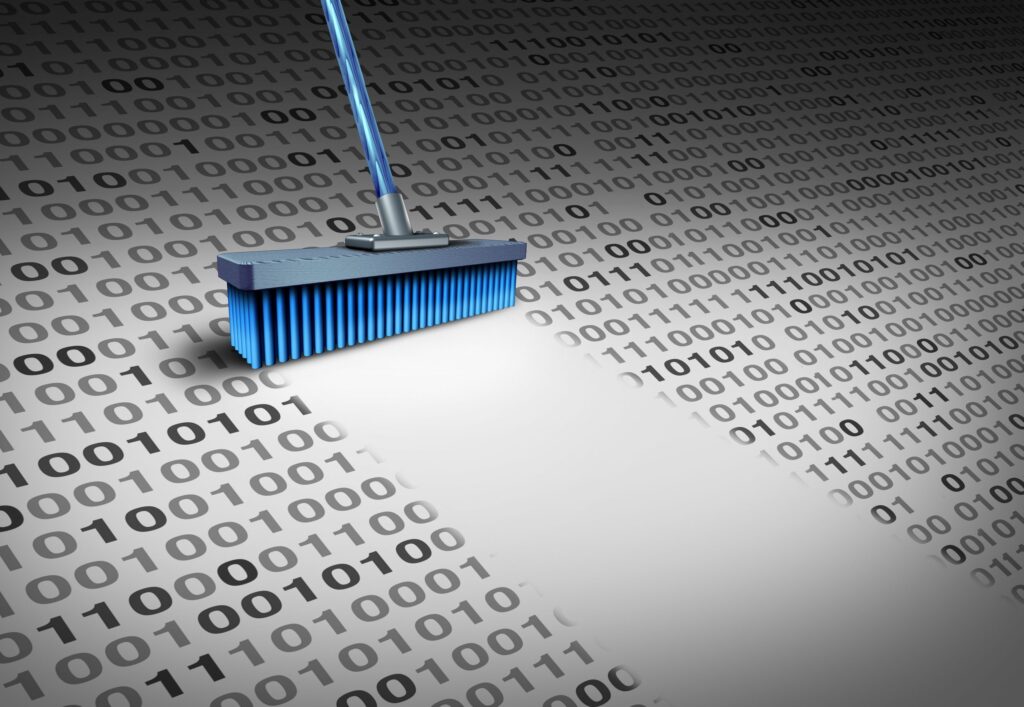
In the world of data science, one truth remains constant: your model is only as good as your data. No matter how advanced your algorithms are, poor-quality data can ruin predictions, distort insights, and mislead business decisions. This is why data cleaning, often considered the most time-consuming part of data science, plays a critical role in building accurate machine learning models and trustworthy analytics.
Studies show that data scientists spend nearly 60–70% of their time cleaning and preparing data. While the process may seem tedious, organizations that prioritize data quality consistently outperform those that don’t. Clean data results in better customer experiences, more reliable forecasts, stronger AI models, and improved operational efficiency.
This blog explores why data cleaning matters, the most effective techniques and tools, and how Code Driven Labs helps businesses build strong, clean, and reliable data pipelines that fuel accurate machine learning models.
Why Data Cleaning Matters
1. Ensures Model Accuracy
Machine learning models rely heavily on patterns found in data. If the data contains noise, errors, duplicates, or inconsistencies, the model learns the wrong patterns. Clean data removes ambiguity and ensures the algorithm receives high-quality signals.
2. Reduces Bias and Misinterpretation
Bad data often contains hidden biases or incomplete information. Cleaning helps remove skewed samples, incorrect labels, and inconsistent values—reducing the risk of biased predictions.
3. Improves Decision-Making
Executives and teams make major business decisions based on analytics. Clean and reliable data ensures decisions are based on facts, not flawed inputs.
4. Saves Cost and Time
Dirty data leads to more rework, inaccurate models, and wasted resources. Cleaning data early prevents costly errors during model training, deployment, and monitoring.
5. Enhances Customer Experience
In sectors like marketing, banking, retail, or healthcare, accurate customer data ensures personalized services, fewer errors, and smoother interactions.
6. Strengthens Compliance and Reporting
Organizations dealing with finance, legal, or healthcare data must maintain strict data accuracy to meet regulatory requirements.
Clean data isn’t optional—it is the foundation of all successful data science and AI initiatives.
Key Data Cleaning Techniques
Below are some of the most widely used and effective techniques to ensure high-quality, trusted datasets.
1. Handling Missing Data
Missing values are one of the biggest challenges in real-world datasets.
Techniques include:
-
Deletion: Removing rows or columns with excessive missing values
-
Imputation: Filling values using
-
mean, median, or mode
-
forward/backward fill
-
regression-based imputation
-
KNN or ML-based imputation
-
-
Model-based prediction: Using models to estimate missing values
The right approach depends on the dataset structure and business requirements.
2. Removing Duplicates
Duplicate entries skew results and create incorrect patterns. Tools automatically identify duplicate rows based on keys or pattern matching, ensuring dataset integrity.
3. Fixing Inconsistent Data Formats
Common issues include:
-
multiple date formats
-
different units of measurement
-
inconsistent naming conventions
-
messy categorical labels
Standardizing formats improves readability and model accuracy.
4. Outlier Detection
Outliers can significantly impact model performance. Detection methods include:
-
z-score analysis
-
interquartile range (IQR)
-
isolation forests
-
DBSCAN clustering
Depending on context, outliers may be corrected, capped, or removed.
5. Data Normalization and Scaling
ML models often require uniform feature scales.
Popular scaling methods:
-
Min-Max Scaling
-
Standardization (Z-score)
-
Robust Scaling
These techniques help models converge faster and perform better.
6. Correcting Data Entry Errors
Manual data entry often leads to:
-
spelling mistakes
-
incorrect values
-
misplaced decimals
-
invalid categories
Automated rule-based systems help catch and correct such errors.
7. Handling Categorical Variables
Data cleaning also involves:
-
merging similar categories
-
encoding labels correctly
-
removing categories with insufficient samples
Quality categorical data improves the reliability of classification models.
8. Feature Engineering Cleanup
During feature engineering, new variables may need:
-
refinement
-
normalization
-
error handling
-
deduplication
Clean features lead to more powerful models.
Popular Tools for Data Cleaning
Businesses today rely on both code-based and no-code tools to streamline the data cleaning process.
1. Python Libraries
-
Pandas: Most popular cleaning and transformation tool
-
NumPy: Numeric data processing
-
Scikit-learn: Preprocessing, scaling, imputation
-
Pyjanitor: Extended cleaning functionality
2. Big Data Tools
-
Apache Spark
-
Databricks
-
BigQuery DataPrep
-
AWS Glue
These are ideal for large-scale enterprise data.
3. No-Code / Low-Code Tools
-
Tableau Prep
-
Power BI Dataflows
-
Alteryx
-
Talend
-
Trifacta
These tools make data cleaning accessible to non-engineers.
4. Cloud-Native Tools
-
AWS Data Wrangler
-
Azure Data Factory
-
Google Cloud Dataprep
These automate end-to-end data pipelines.
Best Practices for Effective Data Cleaning
Adopting strong practices ensures long-term data reliability and healthy ML performance.
1. Establish Clear Data Quality Rules
Define data standards for:
-
accuracy
-
validity
-
completeness
-
consistency
-
uniqueness
This avoids ambiguity in datasets.
2. Automate Data Cleaning Wherever Possible
Automated workflows reduce human error and save time. Tools like Python scripts, Airflow, or ETL pipelines can automate repeated cleaning tasks.
3. Implement Data Validation at Every Stage
Track and validate data during:
-
collection
-
preprocessing
-
feature engineering
-
storage
-
reporting
This helps detect errors early.
4. Maintain a Data Dictionary
A well-structured data dictionary reduces confusion and ensures everyone understands variable definitions.
5. Use Data Profiling Tools Regularly
Data profiling helps identify anomalies, missing values, and unusual patterns before they affect models.
6. Clean Data Continuously, Not Once
Data cleaning should be a continuous process, not a one-time effort. Automated pipelines help maintain long-term quality.
7. Involve Domain Experts
Domain input prevents incorrect cleaning decisions and ensures data interpretation aligns with business goals.
How Code Driven Labs Helps Businesses Improve Data Quality
Code Driven Labs specializes in developing powerful data pipelines and AI systems that are built on clean, reliable, and trustworthy data.
Here’s how the company helps organizations transform their data into a competitive advantage:
1. Building Automated Data Cleaning Pipelines
Code Driven Labs designs automated workflows using:
-
Python
-
Spark
-
Databricks
-
ETL/ELT tools
-
Cloud-native pipelines
These pipelines clean and prepare data in real time, eliminating manual errors.
2. Enterprise-Grade Data Quality Frameworks
They implement strong data governance frameworks that ensure:
-
data accuracy
-
standardization
-
version control
-
continuous validation
This results in cleaner datasets across departments.
3. AI-Powered Anomaly & Outlier Detection
Using ML, Code Driven Labs helps detect:
-
anomalies
-
suspicious patterns
-
incorrect entries
-
missing data leaks
This ensures stronger predictive models.
4. End-to-End Data Preparation for Machine Learning
From raw data to ready-to-train datasets, Code Driven Labs:
-
cleans
-
transforms
-
encodes
-
scales
-
validates
ensuring your ML models are trained on high-quality features.
5. Data Audits and Health Checks
They conduct data audits to assess quality gaps, identify root causes, and build long-term cleaning solutions.
6. Training Teams in Data Cleaning Best Practices
Code Driven Labs also offers training programs for analysts, engineers, and business teams to:
-
write better cleaning scripts
-
follow standardized cleaning rules
-
maintain high-quality datasets
Why Businesses Trust Code Driven Labs
-
strong focus on accuracy and reliability
-
scalable solutions for all data sizes
-
specialization in ML-ready data pipelines
-
deep expertise in data engineering and governance
-
end-to-end support from assessment to deployment
Whether you’re preparing data for analytics, machine learning, business intelligence, or automation—Code Driven Labs ensures the data is clean, consistent, and actionable.
Conclusion
Data cleaning is not just a step in the workflow—it is the backbone of every successful data science and AI initiative. Without clean data, even the best algorithms fail. By adopting the right techniques, tools, and best practices, businesses can build powerful, accurate, and scalable models.
As organizations continue to rely on data-driven decision-making, partnering with experts like Code Driven Labs ensures every dataset is prepared to deliver maximum value. With automated pipelines, robust quality frameworks, and industry-leading tools, Code Driven Labs helps companies unlock deeper insights, reduce errors, and build AI systems that truly perform.