Level up your business with US.
- Home
- ML Ops for Data Scientists: Model Deployment, Monitoring & Automation Explained
ML Ops for Data Scientists: Model Deployment, Monitoring & Automation Explained
December 11, 2025 - Blog
ML Ops for Data Scientists: Model Deployment, Monitoring & Automation Explained
As artificial intelligence rapidly becomes the backbone of modern digital transformation, the responsibility of data scientists has expanded far beyond building models. While creating accurate models is essential, it’s only the first step. The real challenge lies in deploying those models, monitoring their performance, automating workflows, and ensuring they remain reliable long after development.
This is where ML Ops (Machine Learning Operations) comes in. ML Ops bridges the gap between data science and production engineering—helping organizations deploy models faster, reduce operational failures, and scale AI across teams.
By 2026, ML Ops has become a must-have capability in every company that wants to operationalize machine learning. In this detailed guide, we break down everything data scientists need to know: model deployment, monitoring, automation, and how Code Driven Labs helps businesses build robust ML Ops systems.
1. What is ML Ops and Why It Matters in 2026
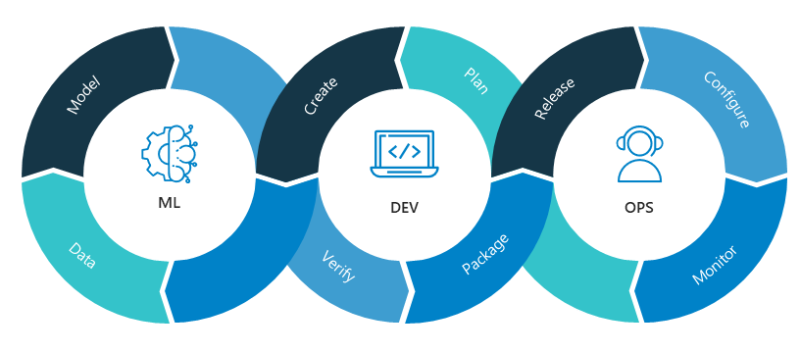
ML Ops combines machine learning, DevOps, data engineering, and continuous delivery principles to streamline the entire machine learning lifecycle.
It includes:
-
Model development
-
Versioning
-
Deployment
-
Monitoring
-
Retraining
-
Governance
-
Automation
The goal is simple: ensure models work reliably at scale.
With industries increasingly adopting AI—finance, manufacturing, retail, healthcare, and logistics—the need to manage, monitor, and maintain hundreds of ML models has skyrocketed. ML Ops ensures models don’t degrade, break, or drift over time.
2. The ML Lifecycle: Where ML Ops Fits
A typical machine learning lifecycle includes:
-
Data Collection & Preprocessing
-
Model Training & Validation
-
Model Deployment
-
Monitoring & Maintenance
-
Continuous Improvement
ML Ops plays a crucial role in stages 3, 4, and 5—ensuring that models remain healthy, scalable, and consistent across environments.
3. ML Ops Component 1: Model Deployment
Model deployment is the process of taking a trained ML model from a notebook or experiment and making it available in a real-world environment.
Different Deployment Approaches
1. Batch Deployment
Model predictions run on scheduled intervals (daily, hourly, weekly).
Used for:
-
Fraud scoring
-
Recommendation batches
-
Forecasting systems
2. Real-Time Deployment (Online Inference)
Models respond instantly to API requests.
Used for:
-
Chatbots
-
Credit approval
-
Recommendation engines
-
Spam detection
3. Edge Deployment
Models run on IoT devices or local hardware.
Used in:
-
Smart cameras
-
Wearable devices
-
Industrial sensors
Key Tools for Deployment
-
Docker & Kubernetes
-
MLflow
-
AWS SageMaker
-
Azure ML
-
TensorFlow Serving
-
REST and gRPC APIs
Deployment requires scalable infrastructure, reliable APIs, and automated pipelines—all enabled by ML Ops.
4. ML Ops Component 2: Model Monitoring
Even the best model deteriorates over time. Real-world data changes—this is known as data drift or concept drift.
ML Ops ensures that models:
-
Perform consistently
-
Detect anomalies
-
Stay aligned with real-world conditions
-
Auto-improve when needed
Types of Model Monitoring
1. Performance Monitoring
Tracks metrics like:
-
Accuracy
-
Precision
-
Recall
-
F1-score
-
ROC-AUC
2. Data Drift Monitoring
Detects when incoming data deviates from training data.
Example:
A retail model trained on pre-holiday traffic may fail off-season.
3. Concept Drift Monitoring
Monitors changes in the relationship between features and predictions.
Example:
Fraud patterns evolve over time, requiring continuous updates.
4. System Monitoring
Ensures:
-
Low latency
-
High availability
-
Minimal downtime
Monitoring is essential for catching problems early and maintaining model trustworthiness.
5. ML Ops Component 3: Automation & CI/CD Pipelines
ML Ops introduces automation so teams don’t manually manage each step.
Automation includes:
1. Continuous Integration (CI)
Automatically tests model code, data pipelines, and updates.
2. Continuous Delivery/Deployment (CD)
Automatically pushes validated models to production.
3. Automated Retraining Pipelines
Triggered when:
-
Model performance drops
-
Data drift occurs
-
New training data is available
Retraining allows models to stay fresh and accurate.
4. Feature Store Automation
Stores, version-controls, and updates features used by multiple models.
Automation ensures speed, reliability, and minimal human intervention—especially important when businesses run hundreds of ML models.
6. ML Ops Component 4: Governance & Model Versioning
Governance ensures transparency and accountability across AI systems.
Key governance features:
-
Model versioning
-
Dataset versioning
-
Experiment tracking
-
Audit logs
-
Approval workflows
-
Compliance standards
Tools like DVC, MLflow, and Kubeflow Tracking help manage versions and ensure model reproducibility.
7. Benefits of ML Ops for Data Scientists
✔ Faster Deployment Cycles
What used to take months now takes days or hours.
✔ Less Manual Work
Automation handles repetitive tasks.
✔ Better Collaboration
Shared pipelines unify data scientists, engineers, and DevOps teams.
✔ Improved Model Accuracy
Continuous monitoring ensures consistently high performance.
✔ Increased Scalability
ML Ops helps organizations deploy hundreds of models.
✔ Transparency & Compliance
Versioning and monitoring improve governance.
8. ML Ops Use Cases Across Industries
1. E-Commerce
-
Dynamic pricing
-
Real-time product recommendations
-
Fraud detection
2. Finance
-
Risk scoring
-
Fraud analytics
-
Loan approval
3. Manufacturing
-
Predictive maintenance
-
Quality monitoring
4. Healthcare
-
Diagnostic systems
-
Care pathway predictions
5. Retail
-
Inventory forecasting
-
Customer segmentation
Each use case requires strong ML Ops foundations.
9. How Code Driven Labs Helps Businesses Implement ML Ops
Code Driven Labs specializes in building end-to-end ML Ops pipelines that allow companies to scale AI reliably and efficiently. Their solutions enable teams to move from experimentation to enterprise-grade production systems.
1. Custom ML Ops Architecture Design
They design ML Ops pipelines tailored to:
-
Business goals
-
Data volume
-
Compliance standards
-
Industry use cases
This ensures scalability and long-term reliability.
2. Automated CI/CD Pipelines for Machine Learning
Code Driven Labs builds CI/CD pipelines that automate:
-
Code testing
-
Model validation
-
Deployment
-
Rollbacks
-
Retraining workloads
This allows teams to deliver updates quickly and safely.
3. Real-Time Model Deployment Solutions
They deploy models using:
-
Kubernetes
-
Docker
-
Cloud-native services
-
Edge AI systems
Ensuring models run efficiently in any environment.
4. Predictive Monitoring Dashboards
Code Driven Labs provides dashboards that track:
-
Model accuracy
-
Latency
-
Drift detection
-
Anomalies
-
Resource usage
These dashboards alert teams when action is needed.
5. Model Governance & Compliance
They implement:
-
Experiment tracking
-
Dataset versioning
-
Model approval workflows
-
Automated audit logs
This ensures transparency and regulatory compliance.
6. Feature Store Design & Automation
Their feature stores ensure:
-
Reusable features
-
Consistency across models
-
Faster development cycles
7. End-to-End AI Lifecycle Automation
From ingestion to deployment, Code Driven Labs automates the entire ML pipeline to reduce manual effort and operational friction.
10. Conclusion
ML Ops is no longer a “nice-to-have”—it is essential for any organization that wants to scale machine learning responsibly and efficiently. As AI adoption grows across industries, the need for strong deployment, monitoring, automation, and governance becomes unavoidable.
With a powerful combination of ML engineering, DevOps frameworks, cloud-native solutions, and automation expertise, Code Driven Labs helps businesses turn ML models into production-ready, self-healing, and continuously improving systems.