Level up your business with US.

- Home
- Machine Learning for Smart Cities: Traffic Flow Optimization, Waste Management & Urban Mobility Planning
Machine Learning for Smart Cities: Traffic Flow Optimization, Waste Management & Urban Mobility Planning
November 29, 2025 - Blog
Machine Learning for Smart Cities: Traffic Flow Optimization, Waste Management & Urban Mobility Planning
As cities continue to grow in population, infrastructure pressure, and mobility demands, the concept of smart cities has become a necessity rather than an ambition. Smart cities leverage advanced technologies such as the Internet of Things (IoT), data analytics, and most importantly, Machine Learning (ML) to improve urban services, reduce congestion, increase sustainability, and enhance the quality of life for citizens.
Machine Learning plays a crucial role in transforming traditional urban operations into intelligent, adaptive, and predictive systems. Through its ability to process massive datasets and learn from patterns, ML is enabling cities to manage traffic congestion, optimize public transportation, streamline waste collection, plan future infrastructures, and build more resilient urban environments.
This SEO-rich blog explores how Machine Learning is revolutionizing traffic flow optimization, waste management, and urban mobility planning, while also highlighting how Code Driven Labs helps governments and city authorities build future-ready, AI-driven smart city solutions.
The Growing Need for Machine Learning in Smart Cities
Modern cities generate massive amounts of data from sensors, cameras, mobile devices, transportation systems, utility networks, and public services. Manually analyzing such vast and dynamic data is nearly impossible. Machine Learning makes it actionable.
Cities use ML to:
-
Predict traffic congestion
-
Manage energy and waste consumption
-
Improve public safety
-
Optimize public transport routes
-
Reduce operational costs
-
Enhance mobility planning
-
Build eco-friendly, sustainable systems
Machine Learning is the central intelligence layer that makes real-time urban decision-making possible.
Machine Learning for Traffic Flow Optimization
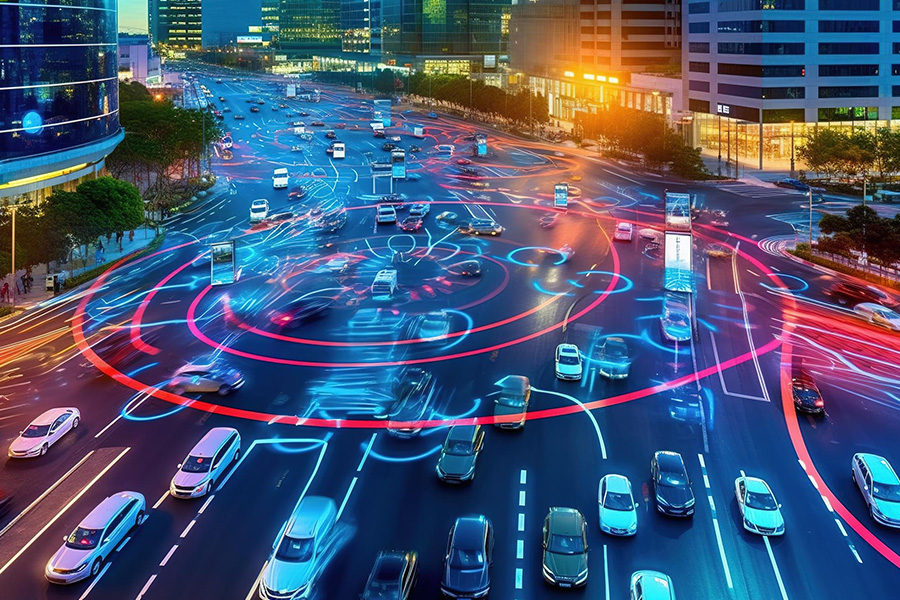
Traffic congestion is a major issue in most cities around the world. Long commute times, fuel waste, traffic-related pollution, and road safety concerns all stem from inefficient traffic systems. Machine Learning helps solve these long-standing problems with data-driven optimization.
1. Real-Time Traffic Prediction
ML algorithms analyse:
-
GPS data
-
CCTV footage
-
Public transit schedules
-
Weather conditions
-
Road accident records
-
Historical traffic flow patterns
Based on these inputs, ML models can predict traffic congestion before it occurs, helping authorities take preventive actions.
2. Intelligent Traffic Signal Control
Traditional traffic light systems operate on fixed timers. Machine Learning enables adaptive traffic signal control that adjusts timings based on:
-
Live vehicle count
-
Pedestrian movement
-
Road incidents
-
Traffic density trends
This reduces bottlenecks, improves flow, and shortens commute times across the city.
3. Accident Detection & Incident Response
Machine Learning systems automatically detect:
-
Sudden vehicle stops
-
Abnormal driving patterns
-
Road blockages
-
Potential collision risks
This enables authorities to dispatch response teams instantly, improving road safety.
4. Route Optimization for Commuters
Navigation platforms powered by ML suggest:
-
Fastest routes
-
Less congested alternate roads
-
Anticipated delays
-
Travel time based on real-time conditions
Drivers and public vehicles reach destinations faster and more efficiently.
Machine Learning in Waste Management: Efficiency Through Prediction
Waste management is one of the most resource-intensive urban operations. Traditional collection systems follow fixed schedules, regardless of waste volume or actual need. Machine Learning introduces predictive accuracy and operational intelligence to waste management systems.
1. Smart Waste Collection Routing
ML analyzes:
-
Fill-level sensors in bins
-
Population density
-
Day-wise waste generation patterns
-
Seasonal variations
-
Local events
-
Weather patterns
Based on this data, ML optimizes collection routes and schedules, reducing unnecessary trips and operational costs.
2. Predictive Analysis for Waste Generation
Cities can forecast:
-
Surges in waste production
-
Peak collection times
-
Waste types in specific localities
This helps in resource allocation, avoiding overflow or mismanagement.
3. Recycling Optimization
Machine Learning identifies recyclable materials from images, sensors, and sorting systems. It improves the accuracy and efficiency of recycling plants by automating sorting and reducing contamination.
4. Operational Cost Reduction
ML-driven waste management systems reduce:
-
Fuel usage
-
Labour hours
-
Vehicle maintenance costs
-
Environmental impact
Sustainable waste management becomes a measurable, achievable reality with Machine Learning.
Machine Learning in Urban Mobility Planning
Urban mobility planning involves designing smart transport systems that offer safety, accessibility, and sustainability. Machine Learning enhances mobility planning by analysing real-time data and predicting the future needs of urban populations.
1. Public Transport Optimization
ML evaluates:
-
Travel demand
-
Passenger density
-
Peak-hour trends
-
Route bottlenecks
-
Ticketing data
Based on this, cities can:
-
Adjust bus and metro frequency
-
Optimize routes
-
Improve last-mile connectivity
-
Manage fleet size efficiently
2. Demand Prediction for Ride-Sharing & Micro-Mobility
Machine Learning accurately predicts demand for:
-
Ride-sharing taxis
-
E-scooters
-
Bike rentals
-
Shuttle services
This ensures availability during peak times and reduces unnecessary idle fleets.
3. Infrastructure Planning
ML models simulate:
-
Future population growth
-
Housing development
-
Transport demand
-
Road capacity
-
Environmental impact
Urban planners can make informed decisions before building roads, metro lines, or flyovers.
4. Pedestrian & Cyclist Safety Enhancement
Using ML, city authorities analyse:
-
Footfall data
-
Accident hotspots
-
Unsafe road segments
-
Crossing behaviour
This helps in redesigning walkways, crosswalks, and cycling lanes to improve safety.
How Code Driven Labs Helps Build Machine Learning Solutions for Smart Cities
Code Driven Labs plays a vital role in enabling smart city ecosystems through advanced Machine Learning, IoT, and data engineering capabilities. Their expertise ensures that AI-powered systems integrate seamlessly with city infrastructure while maintaining security, scalability, and real-time performance.
1. Building End-to-End Smart City ML Platforms
From data collection to model deployment, Code Driven Labs creates fully integrated ML pipelines capable of handling large-scale urban data securely and efficiently.
2. Traffic Optimization Solutions
They develop ML models for:
-
Traffic prediction
-
Signal optimization
-
Route planning
-
Incident detection
These solutions help cities reduce congestion and improve transportation flow.
3. Smart Waste Management Automation
Code Driven Labs provides:
-
Fill-level prediction models
-
Route optimization engines
-
Waste generation forecasting tools
These ML systems drastically improve waste collection efficiency.
4. Urban Mobility Planning Support
Their data science teams analyze transport demand, mobility trends, and infrastructure gaps to build predictive models for future city development.
5. IoT Integration & Sensor Analytics
Code Driven Labs integrates ML with sensor systems to create real-time monitoring networks for traffic, waste, air quality, energy consumption, and more.
6. Cloud-Native, Secure Architecture
All ML systems are deployed on secure, scalable cloud environments with strong encryption, ensuring data privacy and compliance with government standards.
7. Continuous ML Model Monitoring & Improvement
They offer long-term monitoring, retraining, and optimization services to keep ML models accurate and reliable.
Conclusion
Machine Learning has become a foundational technology for building smart cities that prioritize sustainability, efficiency, and enhanced quality of life. From traffic flow optimization and waste management to intelligent urban mobility planning, ML enables data-driven decision-making that transforms city operations.
Code Driven Labs stands as a trusted technology partner for governments, municipalities, and smart city innovators. Through advanced ML solutions, scalable infrastructure, and secure integrations, they help cities become smarter, more sustainable, and better prepared for the future.