Level up your business with US.
- Home
- Machine Learning for Food & Agriculture Supply Chains: Demand Forecasting & Quality Analytics
Machine Learning for Food & Agriculture Supply Chains: Demand Forecasting & Quality Analytics
December 1, 2025 - Blog
Machine Learning for Food & Agriculture Supply Chains: Demand Forecasting & Quality Analytics
The food and agriculture industry operates in one of the most complex and sensitive supply chain environments. From unpredictable weather conditions and fluctuating demand to perishable goods and transportation challenges, the sector faces constant pressure to operate efficiently. Machine Learning (ML) has emerged as a transformative solution, enabling food producers, distributors, and retailers to optimize supply chain performance with precision. With the rise of digital agriculture and smart supply chain platforms, ML is helping businesses improve demand forecasting, reduce waste, maintain quality standards, and enhance overall operational reliability.
This detailed blog explores how Machine Learning is reshaping the food and agriculture supply chain through predictive analytics, quality control automation, and real-time process optimization. Finally, it explains how Code Driven Labs supports industry players with tailored ML solutions that enhance visibility, efficiency, and profitability.
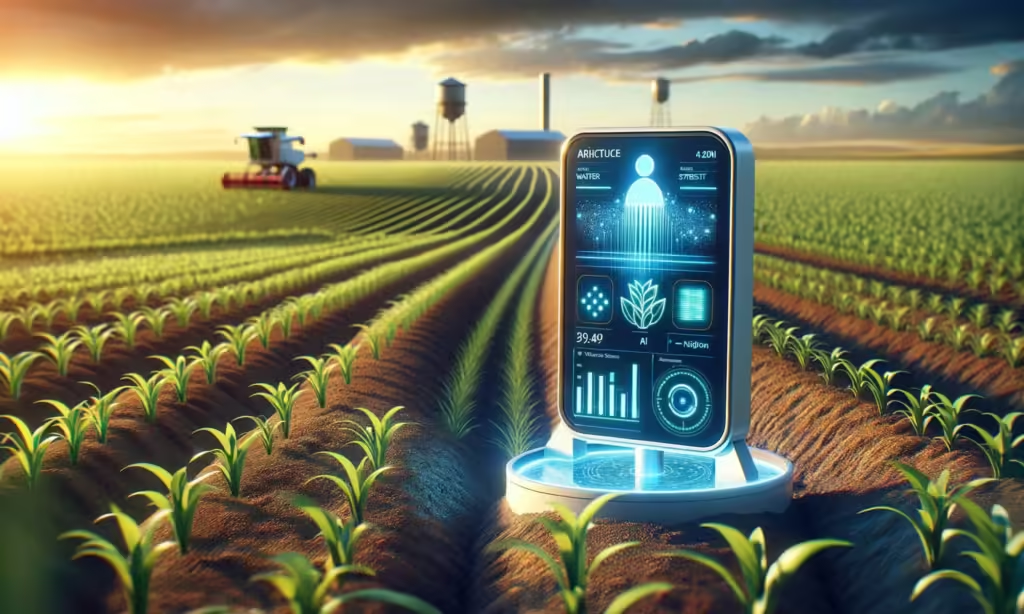
The Need for Machine Learning in Food & Agriculture Supply Chains
The food and agriculture supply chain is uniquely complex due to several challenges:
-
High perishability of products
-
Volatile market demand
-
Climate-driven production variability
-
Complex distribution networks
-
Quality and safety compliance requirements
-
Waste management issues
-
Increasing focus on sustainability and traceability
Traditional forecasting and manual quality inspections often fall short in addressing these modern challenges. Machine Learning, however, provides powerful capabilities to monitor, predict, and optimize the entire lifecycle—from farm production to retail delivery.
ML equips stakeholders with deep insights that enable data-driven decision-making, reducing uncertainties and improving profitability across the supply chain.
Machine Learning for Demand Forecasting in Food Supply Chains
Accurate demand forecasting is essential in the food industry because overproduction leads to waste, while underproduction results in shortages and lost revenue. Machine Learning predicts demand levels with far greater accuracy than traditional methods by analyzing vast datasets and identifying intricate patterns.
1. Multi-Factor Predictive Models
ML models analyze a range of variables such as:
-
Historical demand
-
Seasonal consumption trends
-
Weather patterns
-
Pricing fluctuations
-
Supply disruptions
-
Global market conditions
-
Consumer behavior analytics
By combining these factors, ML generates precise demand predictions for each product category.
2. Reduction of Food Waste
Demand forecasting helps:
-
Align production with real needs
-
Reduce inventory spoilage
-
Optimize storage capacity
-
Improve replenishment cycles
This significantly decreases waste, supporting sustainability goals and cost savings.
3. Improved Production and Distribution Planning
With ML-driven forecasting, producers and distributors can:
-
Adjust planting schedules
-
Allocate resources wisely
-
Manage inventory efficiently
-
Minimize stockouts
-
Forecast raw material needs
This creates a more balanced and responsive supply chain.
4. Retail Sales Optimization
For retailers:
-
ML predicts peak buying times
-
Helps plan promotions effectively
-
Optimizes stock levels across multiple locations
As a result, retailers can enhance customer satisfaction while maximizing revenue.
Machine Learning for Quality Analytics in Agriculture Supply Chains
Quality is a critical factor in the food industry, as spoilage, contamination, or substandard produce can lead to massive financial losses and reputational harm. Machine Learning plays a vital role in ensuring that products meet quality standards throughout the supply chain.
1. Automated Quality Inspection Using Computer Vision
Computer vision models analyze:
-
Shape
-
Color
-
Texture
-
Size
-
Defects
-
Ripeness levels
This automation allows faster, more consistent inspections compared to manual processes, reducing labor costs and improving accuracy.
2. Monitoring Storage and Transportation Conditions
ML systems monitor and predict the impact of conditions such as:
-
Temperature
-
Humidity
-
Atmospheric composition
-
Transportation vibrations
By analyzing this data, ML ensures product freshness and prevents spoilage.
3. Predicting Shelf Life
Machine Learning estimates remaining shelf life by examining:
-
Product characteristics
-
Environmental factors
-
Historical spoilage patterns
-
Microbial growth indicators
This helps retailers optimize stock rotation and pricing strategies.
4. Food Safety Compliance
ML systems detect anomalies that may indicate contamination or safety breaches. They can flag potential issues such as:
-
Unusual chemical presence
-
Irregular patterns in processing
-
Hazardous conditions
This supports safer food distribution and regulatory compliance.
Machine Learning for Supply Chain Optimization
Beyond forecasting and quality analytics, ML supports end-to-end supply chain optimization in the food and agriculture industry.
1. Route Optimization
ML enhances logistics planning by predicting:
-
Traffic congestion
-
Delivery delays
-
Weather disruptions
-
Fuel consumption patterns
Optimized routing reduces transportation costs and ensures timely delivery of perishable goods.
2. Supplier Selection & Risk Assessment
ML models evaluate supplier performance through:
-
Delivery timelines
-
Product quality metrics
-
Pricing history
-
Compliance records
-
Market stability
This allows organizations to choose reliable suppliers and mitigate risks proactively.
3. Predictive Maintenance for Agri-Equipment
Smart sensors and ML models monitor agricultural machinery to detect signs of potential failure. Predictive maintenance reduces downtime and ensures maximum operational efficiency.
4. Farm-to-Fork Traceability
Machine Learning supports full traceability by analyzing data across:
-
Farming practices
-
Harvesting processes
-
Transportation logs
-
Storage conditions
-
Retail handling
This strengthens consumer trust and enhances accountability.
Machine Learning for Sustainability in Agriculture & Food Systems
Sustainability is a growing priority in global food systems. ML contributes to environmental goals by:
-
Reducing food waste
-
Optimizing resource use
-
Forecasting water and fertilizer needs
-
Improving crop yield predictions
-
Enhancing biodiversity management
ML-driven insights help farmers and distributors meet sustainability standards while improving productivity.
How Code Driven Labs Helps Food & Agriculture Organizations with Machine Learning
Code Driven Labs provides advanced ML-powered solutions that optimize every stage of food and agriculture supply chains. Their expertise in AI, data engineering, and predictive analytics allows organizations to implement reliable, scalable, and efficient systems.
1. Custom Demand Forecasting Models
Code Driven Labs develops tailored ML models that analyze:
-
Seasonal trends
-
Market fluctuations
-
Weather conditions
-
Consumer behavior
These forecasting models help companies plan production, minimize waste, and improve supply chain responsiveness.
2. Computer Vision for Quality Control
They create intelligent computer vision systems that automate quality inspection at high speed. These solutions help:
-
Identify defects early
-
Maintain consistent grading
-
Reduce labor costs
-
Improve product quality
This enables organizations to ensure that only premium-quality products reach consumers.
3. Predictive Shelf-Life and Freshness Tracking
Code Driven Labs builds ML systems that predict:
-
Freshness decay
-
Remaining shelf life
-
Spoilage likelihood
Retailers and distributors can use these insights to manage stock better and reduce losses.
4. Smart Logistics and Route Optimization Tools
They design ML-based tools that improve delivery accuracy through:
-
Predictive routing
-
Real-time traffic analysis
-
Dynamic delivery planning
This enhances efficiency, lowers operational costs, and ensures on-time delivery of perishable products.
5. IoT and Sensor Data Integration
Code Driven Labs integrates IoT sensors with ML dashboards to monitor storage and transport conditions. Businesses gain:
-
Real-time visibility
-
Alerts for deviations
-
Predictive quality analytics
This helps maintain product integrity across the supply chain.
6. End-to-End Data Platforms for Supply Chain Intelligence
They develop centralized data platforms that unify information from farms, warehouses, transportation fleets, and retailers. This enhances decision-making and ensures seamless traceability.
7. Industry-Compliant, Secure Solutions
Code Driven Labs ensures all systems comply with:
-
Food safety standards
-
Agricultural regulations
-
Data privacy requirements
Their robust architectures guarantee secure and scalable ML deployment.
Conclusion
Machine Learning is fundamentally transforming food and agriculture supply chains. From predicting demand and optimizing production to ensuring product quality and enhancing sustainability, ML offers unmatched accuracy and efficiency. Businesses that adopt ML-driven systems are better equipped to reduce waste, improve profit margins, and build resilient supply chains.
Code Driven Labs empowers food producers, distributors, and retailers with intelligent ML solutions tailored to their operational needs. Through advanced analytics, computer vision, demand forecasting, and smart logistics tools, they help organizations achieve greater efficiency, transparency, and long-term growth.