Level up your business with US.
- Home
- Edge Computing vs Cloud Computing: Which Is Best for Your IT Strategy?
Edge Computing vs Cloud Computing: Which Is Best for Your IT Strategy?
January 13, 2026 - Blog
Edge Computing vs Cloud Computing: Which Is Best for Your IT Strategy?
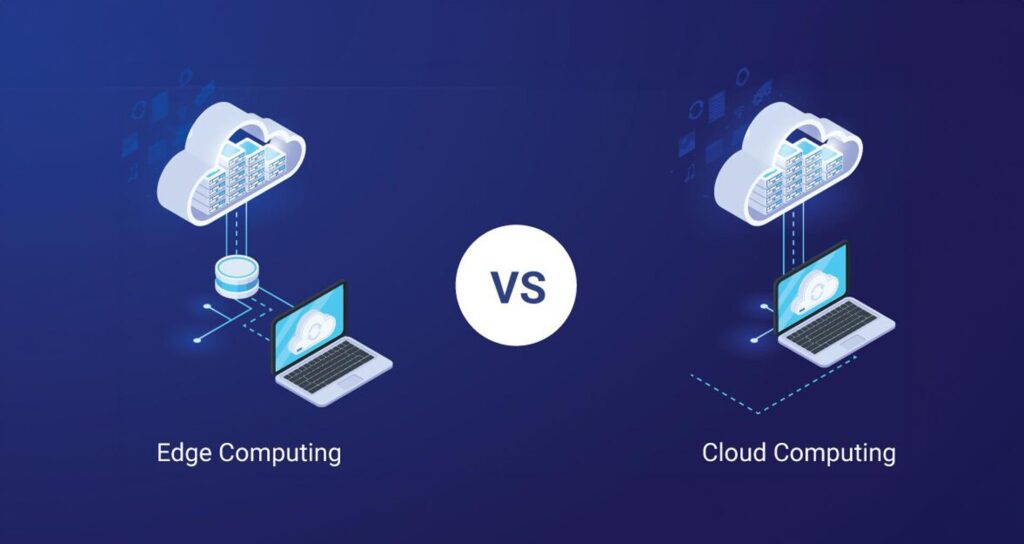
As digital transformation accelerates, organizations are processing more data than ever before. From IoT devices and smart applications to AI-driven analytics, businesses need IT architectures that are fast, scalable, and reliable. Two dominant approaches—Edge Computing and Cloud Computing—are shaping modern IT strategies.
While both offer significant advantages, they serve different purposes. Choosing the right approach—or the right combination—can have a major impact on performance, cost, security, and scalability. This blog compares Edge Computing vs Cloud Computing, explores their use cases, benefits, and challenges, and helps you determine which is best for your IT strategy in 2026 and beyond.
What Is Cloud Computing?
Cloud computing refers to delivering computing resources—servers, storage, databases, networking, and software—over the internet. Instead of managing on-premises infrastructure, organizations rely on cloud service providers to scale resources on demand.
Key Characteristics of Cloud Computing
-
Centralized data processing
-
Elastic scalability
-
Pay-as-you-go pricing models
-
Global accessibility
-
Managed infrastructure and services
Cloud computing has become the foundation for web applications, data analytics, AI workloads, and enterprise systems.
What Is Edge Computing?
Edge computing brings computation and data storage closer to the source of data generation, such as IoT devices, sensors, or local servers. Instead of sending all data to a centralized cloud, processing happens at or near the “edge” of the network.
Key Characteristics of Edge Computing
-
Decentralized data processing
-
Ultra-low latency
-
Reduced bandwidth usage
-
Real-time decision-making
-
Localized data control
Edge computing is increasingly used in environments where speed, reliability, and local autonomy are critical.
Edge Computing vs Cloud Computing: Core Differences
1. Latency and Performance
-
Cloud Computing: Data must travel to centralized data centers, which can introduce latency—especially for real-time applications.
-
Edge Computing: Processes data locally, enabling near-instant responses.
Winner: Edge computing for real-time use cases.
2. Scalability and Flexibility
-
Cloud Computing: Offers virtually unlimited scalability with minimal setup.
-
Edge Computing: Scaling requires deploying additional edge devices or infrastructure.
Winner: Cloud computing for large-scale, dynamic workloads.
3. Data Processing and Bandwidth
-
Cloud Computing: Requires continuous data transmission, increasing bandwidth costs.
-
Edge Computing: Filters and processes data locally, sending only relevant information to the cloud.
Winner: Edge computing for data-intensive environments.
4. Reliability and Availability
-
Cloud Computing: Dependent on stable internet connectivity.
-
Edge Computing: Continues to operate even during network outages.
Winner: Edge computing in remote or mission-critical environments.
5. Security and Compliance
-
Cloud Computing: Strong centralized security but may raise data residency concerns.
-
Edge Computing: Keeps sensitive data closer to its source, improving compliance in regulated industries.
Winner: Depends on regulatory and data governance requirements.
6. Cost Considerations
-
Cloud Computing: Lower upfront costs but ongoing usage fees.
-
Edge Computing: Higher initial investment but lower recurring data transfer costs.
Winner: Depends on workload patterns and scale.
Use Cases for Cloud Computing
Cloud computing is ideal for:
-
Web and mobile applications
-
Big data analytics
-
Machine learning model training
-
Enterprise software systems (ERP, CRM)
-
Backup and disaster recovery
Its scalability and flexibility make it a strong choice for most general-purpose workloads.
Use Cases for Edge Computing
Edge computing is best suited for:
-
IoT and smart devices
-
Autonomous vehicles and robotics
-
Manufacturing and industrial automation
-
Healthcare monitoring systems
-
Retail analytics and smart stores
These applications require real-time processing and low latency.
Hybrid and Edge-to-Cloud Strategies
In reality, most organizations don’t choose edge or cloud—they choose both. A hybrid strategy allows:
-
Real-time processing at the edge
-
Centralized analytics and storage in the cloud
-
Better performance, cost optimization, and resilience
This edge-to-cloud model is becoming the preferred IT strategy for modern enterprises.
How to Choose the Right Approach for Your IT Strategy
When deciding between edge computing and cloud computing, consider:
-
Latency requirements
-
Data volume and bandwidth costs
-
Security and compliance needs
-
Scalability expectations
-
Budget and infrastructure capabilities
The right answer often lies in aligning technology choices with business objectives.
How Code Driven Labs Helps You Build the Right IT Strategy
Code Driven Labs helps organizations design and implement cloud, edge, and hybrid computing architectures tailored to their business needs.
Architecture Assessment and Strategy
They analyze workloads, performance requirements, and business goals to recommend the most effective edge, cloud, or hybrid approach.
Cloud-Native and Edge Solutions
Code Driven Labs builds scalable cloud-native applications and edge-enabled systems that deliver high performance and reliability.
Edge-to-Cloud Integration
They seamlessly integrate edge devices with cloud platforms for centralized management, analytics, and monitoring.
Security and Compliance
Code Driven Labs implements robust security frameworks, ensuring data protection, access control, and regulatory compliance across environments.
Ongoing Optimization and Support
From cost optimization to performance monitoring, they help businesses continuously improve their IT infrastructure.
By combining deep technical expertise with a business-first mindset, Code Driven Labs ensures IT strategies deliver measurable value.
Final Thoughts
Edge computing and cloud computing are not competitors—they are complementary technologies. Cloud computing offers unmatched scalability and flexibility, while edge computing delivers speed and real-time intelligence.
The most successful IT strategies in 2026 will leverage both, creating resilient, efficient, and future-ready systems. With the right guidance and implementation partner, organizations can confidently navigate this decision.