
- Home
- Machine Learning in Agriculture and Farming: Precision Farming, Crop Yield Prediction and Sensor Analytics
Machine Learning in Agriculture and Farming: Precision Farming, Crop Yield Prediction and Sensor Analytics
November 14, 2025 - Blog
Machine Learning in Agriculture & Farming: Precision Farming, Crop Yield Prediction & Sensor Analytics
Agriculture is undergoing a major digital transformation, with Machine Learning (ML) emerging as a powerful force behind smarter, more efficient, and more sustainable farming. From predicting crop yield with high accuracy to analyzing soil conditions and optimizing irrigation, ML technologies are allowing farmers and agribusinesses to take data-driven decisions like never before. As global food demand increases and environmental pressures intensify, Machine Learning provides the foundation for precision agriculture, resource optimization, and improved profitability.
In this SEO-rich, comprehensive guide, we explore how Machine Learning is revolutionizing agriculture through precision farming, crop yield prediction, sensor analytics, disease detection, and automation—while also highlighting how Code Driven Labs helps agritech companies, farms, and agricultural platforms implement these cutting-edge AI solutions.
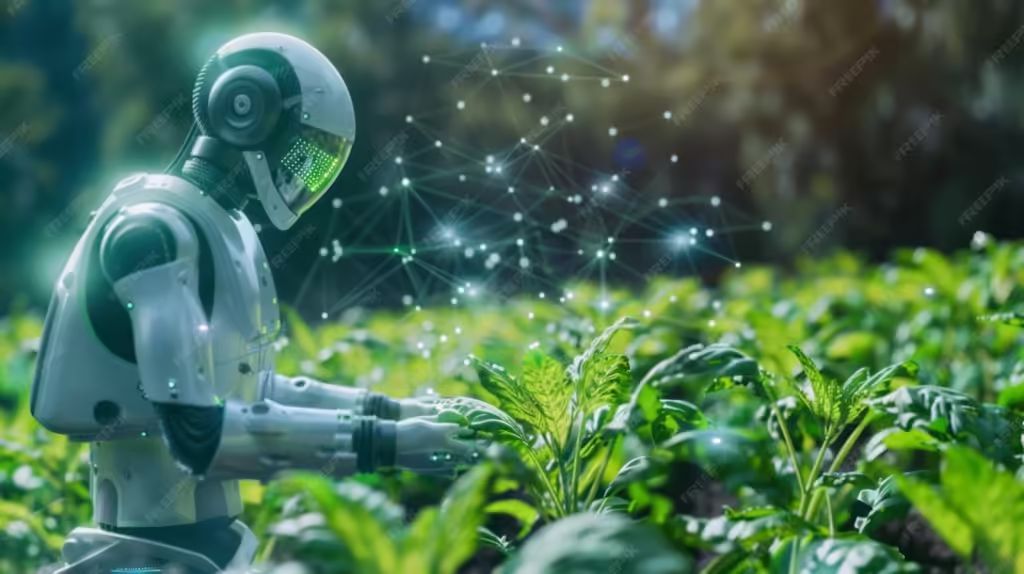
How Machine Learning Is Transforming Agriculture
Agriculture has traditionally relied on human intuition, seasonal knowledge, and historical practices. While these remain important, the limitations are clear—unpredictable weather patterns, crop diseases, soil degradation, and global market fluctuations require modern, data-powered solutions.
Machine Learning enables farmers to analyze multiple agricultural variables in real time, including:
-
Soil quality
-
Crop health
-
Irrigation levels
-
Weather patterns
-
Pest activity
-
Market demand
-
Equipment performance
By identifying patterns humans cannot see, ML models optimize farming from seed to sale.
1. Precision Farming: Smarter, Resource-Efficient Agriculture
Precision farming uses advanced ML algorithms to guide farmers on exactly how much water, fertilizer, or pesticide is needed in specific regions of their land. Instead of treating the entire farm uniformly, ML enables micro-level management.
How ML Powers Precision Farming:
1.1 Soil Health Monitoring
Machine Learning models analyze soil samples, satellite images, and IoT data to determine:
-
Soil nutrients
-
Moisture levels
-
Organic matter
-
pH value
-
Soil type
This helps farmers apply nutrients accurately, reducing waste and improving soil health.
1.2 Smart Irrigation
ML-enabled irrigation systems predict water requirements based on:
-
Evaporation rate
-
Plant growth stage
-
Soil moisture readings
-
Weather data
This ensures water is distributed optimally, reducing water consumption by up to 40 percent in some cases.
1.3 Precision Fertilizer & Pesticide Use
ML guides farmers to use chemicals only where required, minimizing cost, improving yields, and reducing environmental impact.
2. Crop Yield Prediction: Plan Ahead with Data-Driven Insights
One of the most valuable applications of Machine Learning in agriculture is crop yield prediction. Predictive models use historical and real-time data to forecast harvest output, helping farmers plan better and reduce risk.
2.1 Data Used for Yield Prediction:
ML models analyze:
-
Weather history
-
Rainfall levels
-
Temperature patterns
-
Soil characteristics
-
Crop genetics
-
Planting dates
-
Fertilizer used
-
Remote sensing data
2.2 Benefits of ML-Based Crop Yield Prediction
-
Prevents over- or under-production
-
Helps farmers set accurate selling prices
-
Supports supply chain planning
-
Enables risk management in case of drought or pests
-
Provides baseline data for loan eligibility and insurance claims
Agribusiness platforms and government institutions also use these predictions to make policy and procurement decisions.
3. Sensor Analytics: Real-Time Insights Through IoT & ML
Modern farms use IoT sensors placed in the soil, irrigation systems, tractors, greenhouses, and storage facilities. Machine Learning processes this continuous flow of data to detect anomalies, optimize operations, and prevent disasters.
3.1 Types of IoT Sensors in Smart Farms:
-
Soil moisture sensors
-
Nutrient sensors
-
Weather sensors
-
Pest detection sensors
-
PH and chemical-level sensors
-
Smart irrigation controllers
-
Greenhouse temperature and humidity sensors
3.2 ML-Driven Insights from Sensor Data
Machine Learning algorithms can:
-
Detect irrigation leaks
-
Identify early signs of pest infestation
-
Predict crop stress
-
Detect nutrient deficiency
-
Optimize greenhouse climate
-
Monitor machinery performance
This level of real-time intelligence brings automation and accuracy to farming.
4. ML for Crop Disease Detection & Pest Control
Crop diseases and pests are major contributors to agricultural loss worldwide. Machine Learning models trained on thousands of crop images can identify diseases with startling accuracy—sometimes earlier than the human eye can detect.
4.1 AI-Driven Detection Methods:
-
Drone-based imaging
-
Leaf image classification
-
Remote sensing
-
Thermal imaging
4.2 Benefits of ML-Based Disease Detection
-
Fast and accurate diagnosis
-
Reduced crop loss
-
Lower pesticide use
-
Early intervention planning
Farmers can snap a photo of an infected plant, upload it to an AI-powered agriculture portal, and receive instant insights.
5. ML for Farm Equipment Optimization
Machine Learning enables predictive maintenance of tractors, harvesters, irrigation motors, and grain-drying machines.
5.1 What ML Predicts:
-
Equipment failures
-
Fuel efficiency
-
Maintenance schedules
-
Component wear and tear
This helps farmers reduce downtime and repair costs.
6. How Code Driven Labs Helps Implement Machine Learning in Agriculture
Code Driven Labs specializes in building robust, scalable, and intelligent AI-powered agricultural platforms. Whether you’re an agritech startup, a farming enterprise, or a government agriculture initiative, our ML solutions transform decision-making and enhance productivity.
Here’s how Code Driven Labs supports the agriculture sector:
6.1 Custom ML Models for Precision Farming
We develop Machine Learning models tailored to farm size, crop type, soil structure, and climate. These models help optimize:
-
Irrigation
-
Fertilization
-
Pest control
-
Soil management
Our systems integrate seamlessly with IoT sensors and satellite data.
6.2 Crop Yield Prediction Models
Code Driven Labs builds high-accuracy predictive models using multi-source data such as:
-
Satellite imagery
-
Soil profiles
-
Weather forecasts
-
Historical yield records
We help agriculture businesses forecast demand, manage distribution, and improve financial planning.
6.3 AI-Based Crop Health & Pest Detection
Using advanced image classification models, we develop systems that identify plant diseases early and recommend treatment measures. This helps farmers reduce crop loss and improve output quality.
6.4 End-to-End Agricultural Dashboards & Web Platforms
We build AI-powered agricultural websites with features like:
-
Farm analytics dashboards
-
Sensor monitoring panels
-
Crop disease reporting
-
Predictive alerts
-
Smart irrigation management
-
Fertilizer recommendation systems
These platforms are tailored to improve efficiency and accessibility for farmers and stakeholders.
6.5 Seamless Integration of IoT & Sensor Data
Code Driven Labs helps agriculture companies integrate sensor devices and run real-time analytics. We transform raw data into actionable insights that increase farm productivity.
Conclusion
Machine Learning is driving a revolution in agriculture, turning traditional farming into a smart, data-driven ecosystem. From precision farming and crop yield prediction to IoT sensor analytics and disease detection, ML empowers farmers to maximize productivity, reduce waste, and mitigate risks. As agriculture becomes increasingly technology-driven, the demand for AI-powered solutions continues to rise.
Code Driven Labs enables this transformation by helping agricultural companies, farms, and agritech platforms implement intelligent ML systems tailored to real-world farming challenges. Through advanced analytics, predictive insights, and seamless automation, Code Driven Labs helps build the future of sustainable and efficient agriculture.